
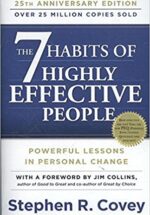

The ۷ Habits of Highly Effective People: Powerful Lessons in Personal Change
by
This twenty-fifth anniversary edition of Stephen Covey’s cherished classic commemorates the timeless wisdom of the 7 Habits.
One of the most inspiring and impactful books ever written, The 7 Habits of Highly Effective People has captivated readers for 25 years. It has transformed the lives of Presidents and CEOs, educators and parents— in short, millions of people of all ages and occupations.

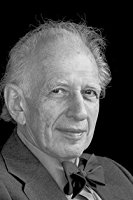
The Age of Insight: The Quest to Understand the Unconscious in Art, Mind, and Brain, from Vienna ۱۹۰۰ to the Present
by
A brilliant book by Nobel Prize winner Eric R. Kandel, The Age of Insight takes us to Vienna 1900, where leaders in science, medicine, and art began a revolution that changed forever how we think about the human mind—our conscious and unconscious thoughts and emotions—and how mind and brain relate to art.
At the turn of the century, Vienna was the cultural capital of Europe. Artists and scientists met in glittering salons, where they freely exchanged ideas that led to revolutionary breakthroughs in psychology, brain science, literature, and art. Kandel takes us into the world of Vienna to trace, in rich and rewarding detail, the ideas and advances made then, and their enduring influence today.
The Vienna School of Medicine led the way with its realization that truth lies hidden beneath the surface. That principle infused Viennese culture and strongly influenced the other pioneers of Vienna 1900. Sigmund Freud shocked the world with his insights into how our everyday unconscious aggressive and erotic desires are repressed and disguised in symbols, dreams, and behavior. Arthur Schnitzler revealed women’s unconscious sexuality in his novels through his innovative use of the interior monologue. Gustav Klimt, Oscar Kokoschka, and Egon Schiele created startlingly evocative and honest portraits that expressed unconscious lust, desire, anxiety, and the fear of death.
Kandel tells the story of how these pioneers—Freud, Schnitzler, Klimt, Kokoschka, and Schiele—inspired by the Vienna School of Medicine, in turn influenced the founders of the Vienna School of Art History to ask pivotal questions such as What does the viewer bring to a work of art? How does the beholder respond to it? These questions prompted new and ongoing discoveries in psychology and brain biology, leading to revelations about how we see and perceive, how we think and feel, and how we respond to and create works of art. Kandel, one of the leading scientific thinkers of our time, places these five innovators in the context of today’s cutting-edge science and gives us a new understanding of the modernist art of Klimt, Kokoschka, and Schiele, as well as the school of thought of Freud and Schnitzler. Reinvigorating the intellectual enquiry that began in Vienna 1900, The Age of Insight is a wonderfully written, superbly researched, and beautifully illustrated book that also provides a foundation for future work in neuroscience and the humanities. It is an extraordinary book from an international leader in neuroscience and intellectual history.

The Big Black Book of Very Dirty Words
by
Airplane Blonde. Intercorpse. Prostitot. Queef. Rainbow Kiss.
There's a big world of obscenity out there--and you'll explore every profane nook and cranny in this compilation. We're talking about more than 2,000 insults, obscenities, and vulgarities raw enough to make even the most unflappable linguist blush.
Forget grammar school swearing; this is advanced cursing for the most discerning dirty mouths! From the colorful--geequals, manscape, prairie dog--to the crude--giraffe, Roman shower, vagitarian, this big-ass book of bad language will have you dissing douchebags with doolally style in just a friggin' minute!


The Black Hole War: My Battle with Stephen Hawking to Make the World Safe for Quantum Mechanics
by
At the beginning of the 21st century, physics is being driven to very unfamiliar territory--the domain of the incredibly small and the incredibly heavy. The new world is a world in which both quantum mechanics and gravity are equally important. But mysteries remain. One of the biggest involved black holes. Famed physicist Stephen Hawking claimed that anything sucked in a black hole was lost forever. For three decades, Leonard Susskind and Hawking clashed over the answer to this problem. Finally, in 2004, Hawking conceded.
THE BLACK HOLE WAR will explain the mind-blowing science that finally won out, and the emergence of a new paradigm that argues the world--this catalog, your home, your breakfast, you--is actually a hologram projected from the edges of space.
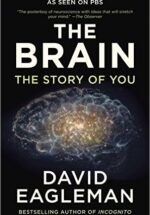

The Brain: The Story of You
by
Locked in the silence and darkness of your skull, your brain fashions the rich narratives of your reality and your identity. Join renowned neuroscientist David Eagleman for a journey into the questions at the mysterious heart of our existence. What is reality? Who are “you”? How do you make decisions? Why does your brain need other people? How is technology poised to change what it means to be human? In the course of his investigations, Eagleman guides us through the world of extreme sports, criminal justice, facial expressions, genocide, brain surgery, gut feelings, robotics, and the search for immortality. Strap in for a whistle-stop tour into the inner cosmos. In the infinitely dense tangle of billions of brain cells and their trillions of connections, something emerges that you might not have expected to see in there: you.
This is the story of how your life shapes your brain, and how your brain shapes your life.
(A companion to the six-part PBS series. Color illustrations throughout.)

The Brain’s Way of Healing: Remarkable Discoveries and Recoveries from the Frontiers of Neuroplasticity
by
NEW YORK TIMES BESTSELLER
The New York Times–bestselling author of The Brain That Changes Itself presents astounding advances in the treatment of brain injury and illness. Now in an updated and expanded paperback edition.
Winner of the 2015 Gold Nautilus Award in Science & Cosmology
In his groundbreaking work The Brain That Changes Itself, Norman Doidge introduced readers to neuroplasticity—the brain’s ability to change its own structure and function in response to activity and mental experience. Now his revolutionary new book shows how the amazing process of neuroplastic healing really works. The Brain’s Way of Healing describes natural, noninvasive avenues into the brain provided by the energy around us—in light, sound, vibration, and movement—that can awaken the brain’s own healing capacities without producing unpleasant side effects. Doidge explores cases where patients alleviated chronic pain; recovered from debilitating strokes, brain injuries, and learning disorders; overcame attention deficit and learning disorders; and found relief from symptoms of autism, multiple sclerosis, Parkinson’s disease, and cerebral palsy. And we learn how to vastly reduce the risk of dementia, with simple approaches anyone can use.
For centuries it was believed that the brain’s complexity prevented recovery from damage or disease. The Brain’s Way of Healing shows that this very sophistication is the source of a unique kind of healing. As he did so lucidly in The Brain That Changes Itself, Doidge uses stories to present cutting-edge science with practical real-world applications, and principles that everyone can apply to improve their brain’s performance and health.


The Complete Idiot’s Guide to String Theory
by
Everything is connected…
We'’re living in the midst of a scientific revolution that’'s captured the general public’'s attention and imagination. The aim of this new revolution is to develop a “theory of everything”— -- a set of laws of physics that will explain all that can be explained, ranging from the tiniest subatomic particle to the universe as a whole. Here, readers will learn the ideas behind the theories, and their effects upon our world, our civilization, and ourselves.


The Demonologist: The Extraordinary Career of Ed and Lorraine Warren -The Paranormal Investigators Featured in the Film The Conjuring
by
If you think ghosts are only responsible for hauntings, think again. This New York Times Best Seller reveals the grave religious process behind supernatural events and how it can happen to you. Used as a text in seminaries and classrooms, this is one book you can't put down. For over five decades Ed and Loraine Warren have been considered America's foremost experts on demonology and exorcism. With thousands of investigations to their credit, they reveal what actually breaks the peace in haunted houses. Chapters include Annabelle and The Enfield Poltergeist. Don't miss the the Warrens in the hit film 'The Conjuring' and the upcoming film 'The Conjuring 2: The Enfield Poltergeist' in theaters June, 2016.
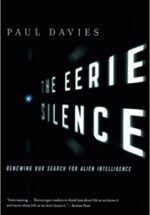

The Eerie Silence: Renewing Our Search for Alien Intelligence
by
One of the world’s leading scientists explains why—and how—the search for intelligent life beyond Earth should be expanded.
Fifty years ago, a young astronomer named Frank Drake first pointed a radio telescope at nearby stars in the hope of picking up a signal from an alien civilization. Thus began one of the boldest scientific projects in history, the Search for Extraterrestrial Intelligence (SETI). After a half-century of scanning the skies, however, astronomers have little to report but an eerie silence—eerie because many scientists are convinced that the universe is teeming with life. Physicist and astrobiologist Paul Davies has been closely involved with SETI for three decades and chairs the SETI Post-Detection Taskgroup, charged with deciding what to do if we’re suddenly confronted with evidence of alien intelligence. He believes the search so far has fallen into an anthropocentric trap—assuming that an alien species will look, think, and behave much like us. In this provocative book Davies refocuses the search, challenging existing ideas of what form an alien intelligence might take, how it might try to communicate with us, and how we should respond if it does.

The Egyptian Book of the Dead: The Papyrus of Ani in the British Museum
by

The Egyptians
by
The sheer age and endurance of the culture of ancient Egypt is staggering. The first pharaoh mounted his throne more than 5,000 years ago - when Europe’s hunter-gatherers were just taking up primitive farming - and their dynasties ruled for the next 3,000 years. Egyptian culture reigned supreme: Even when Alexander the Great conquered the land in 332 B.C., the generals who followed him adopted Egyptian ways and gave rise to a new line of pharaohs that ended with Cleopatra. While other civilizations rose and fell, the Egyptians endured: They tilled their land, built their monuments, worshipped their gods, grew and shrank and restored their empire, and left a permanent mark on the world. Here is their story.
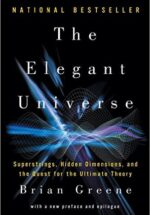

The Elegant Universe: Superstrings, Hidden Dimensions, and the Quest for the Ultimate Theory
by
The international bestseller that inspired a major Novaspecial and sparked a new understanding of the universe, now with a new preface and epilogue.
Brian Greene, one of the world's leading string theorists, peels away layers of mystery to reveal a universe that consists of eleven dimensions, where the fabric of space tears and repairs itself, and all matter―from the smallest quarks to the most gargantuan supernovas―is generated by the vibrations of microscopically tiny loops of energy. The Elegant Universemakes some of the most sophisticated concepts ever contemplated accessible and thoroughly entertaining, bringing us closer than ever to understanding how the universe works.


The End of Faith: Religion, Terror, and the Future of Reason
by
"The End of Faith articulates the dangers and absurdities of organized religion so fiercely and so fearlessly that I felt relieved as I read it, vindicated....Harris writes what a sizable number of us think, but few are willing to say."―Natalie Angier, ?New York Times
In ?The End of Faith?, Sam Harris delivers a startling analysis of the clash between reason and religion in the modern world. He offers a vivid, historical tour of our willingness to suspend reason in favor of religious beliefs―even when these beliefs inspire the worst human atrocities. While warning against the encroachment of organized religion into world politics, Harris draws on insights from neuroscience, philosophy, and Eastern mysticism to deliver a call for a truly modern foundation for ethics and spirituality that is both secular and humanistic. Winner of the 2005 PEN/Martha Albrand Award for Nonfiction.


The French Revolution: A Very Short Introduction
by
Beginning with a discussion of familiar images of the French Revolution, garnered from Dickens, Baroness Orczy, and Tolstoy, as well as the legends of let them eat cake, and tricolours, Doyle leads the reader to the realization that we are still living with developments and consequences of the French Revolution such as decimalization, and the whole ideology of human rights. Continuing with a brief survey of the old regime and how it collapsed, Doyle continues to ellucidate how the revolution happened: why did the revolutionaries quarrel with the king, the church and the rest of Europe, why this produced Terror, and finally how it accomplished rule by a general. The revolution destroyed the age-old cultural, institutional and social structures in France and beyond. This book looks at how the ancien regime became ancien as well as examining cases in which achievement failed to match ambition. Doyle explores the legacy of the revolution in the form of rationality in public affairs and responsible government, and finishes his examination of the revolution with a discussion of why it has been so controversial.


The Gifts of Imperfection: Let Go of Who You Think You’re Supposed to Be and Embrace Who You Are
by
In The Gifts of Imperfection, Brené Brown, a leading expert on shame, authenticity, and belonging, shares ten guideposts on the power of Wholehearted living—a way of engaging with the world from a place of worthiness.
Each day we face a barrage of images and messages from society and the media telling us who, what, and how we should be. We are led to believe that if we could only look perfect and lead perfect lives, we'd no longer feel inadequate. So most of us perform, please, and perfect, all the while thinking, "What if I can't keep all of these balls in the air? Why isn't everyone else working harder and living up to my expectations? What will people think if I fail or give up? When can I stop proving myself?"
In her ten guideposts, Brown engages our minds, hearts, and spirits as she explores how we can cultivate the courage, compassion, and connection to wake up in the morning and think, "No matter what gets done and how much is left undone, I am enough," and to go to bed at night thinking, "Yes, I am sometimes afraid, but I am also brave. And, yes, I am imperfect and vulnerable, but that doesn't change the truth that I am worthy of love and belonging."
"This important book is about the lifelong journey from 'What will people think?' to 'I am enough.' Brown's unique ability to blend original research with honest storytelling makes reading The Gifts of Imperfection like having a long, uplifting conversation with a very wise friend who offers compassion, wisdom, and great advice."
—Harriet Lerner, New York Times best-selling author of The Dance of Anger and The Dance of Connection
"Brené Brown courageously tackles the dark emotions that get in the way of leading a fuller life; read this book and let some of that courage rub off on you."
—Daniel H. Pink, New York Times best-selling author of A Whole New Mind
"Courage, compassion, and connection: Through Brené's research, observations, and guidance, these three little words can open the door to amazing change in your life.'"
—Ali Edwards, author of Life Artist

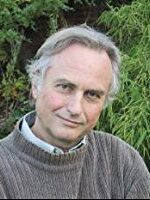
The God Delusion
by
A preeminent scientist -- and the world's most prominent atheist -- asserts the irrationality of belief in God and the grievous harm religion has inflicted on society, from the Crusades to 9/11.
With rigor and wit, Dawkins examines God in all his forms, from the sex-obsessed tyrant of the Old Testament to the more benign (but still illogical) Celestial Watchmaker favored by some Enlightenment thinkers. He eviscerates the major arguments for religion and demonstrates the supreme improbability of a supreme being. He shows how religion fuels war, foments bigotry, and abuses children, buttressing his points with historical and contemporary evidence. The God Delusion makes a compelling case that belief in God is not just wrong but potentially deadly. It also offers exhilarating insight into the advantages of atheism to the individual and society, not the least of which is a clearer, truer appreciation of the universe's wonders than any faith could ever muster.


The Golden Ratio: The Story of PHI, the World’s Most Astonishing Number
by
Throughout history, thinkers from mathematicians to theologians have pondered the mysterious relationship between numbers and the nature of reality. In this fascinating book, Mario Livio tells the tale of a number at the heart of that mystery: phi, or 1.6180339887...This curious mathematical relationship, widely known as "The Golden Ratio," was discovered by Euclid more than two thousand years ago because of its crucial role in the construction of the pentagram, to which magical properties had been attributed. Since then it has shown a propensity to appear in the most astonishing variety of places, from mollusk shells, sunflower florets, and rose petals to the shape of the galaxy. Psychological studies have investigated whether the Golden Ratio is the most aesthetically pleasing proportion extant, and it has been asserted that the creators of the Pyramids and the Parthenon employed it. It is believed to feature in works of art from Leonardo da Vinci's Mona Lisa to Salvador Dali's The Sacrament of the Last Supper, and poets and composers have used it in their works. It has even been found to be connected to the behavior of the stock market!
The Golden Ratio is a captivating journey through art and architecture, botany and biology, physics and mathematics. It tells the human story of numerous phi-fixated individuals, including the followers of Pythagoras who believed that this proportion revealed the hand of God; astronomer Johannes Kepler, who saw phi as the greatest treasure of geometry; such Renaissance thinkers as mathematician Leonardo Fibonacci of Pisa; and such masters of the modern world as Goethe, Cezanne, Bartok, and physicist Roger Penrose. Wherever his quest for the meaning of phi takes him, Mario Livio reveals the world as a place where order, beauty, and eternal mystery will always coexist.
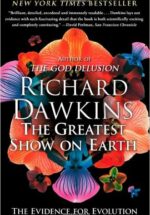
The Greatest Show on Earth: The Evidence for Evolution
by
Richard Dawkins transformed our view of God in his blockbuster, The God Delusion, which sold more than 2 million copies in English alone. He revolutionized the way we see natural selection in the seminal bestseller The Selfish Gene. Now, he launches a fierce counterattack against proponents of "Intelligent Design" in his New York Times bestseller, The Greatest Show on Earth.
"Intelligent Design" is being taught in our schools; educators are being asked to "teach the controversy" behind evolutionary theory. There is no controversy. Dawkins sifts through rich layers of scientific evidence—from living examples of natural selection to clues in the fossil record; from natural clocks that mark the vast epochs wherein evolution ran its course to the intricacies of developing embryos; from plate tectonics to molecular genetics—to make the airtight case that "we find ourselves perched on one tiny twig in the midst of a blossoming and flourishing tree of life and it is no accident, but the direct consequence of evolution by non-random selection." His unjaded passion for the natural world turns what might have been a negative argument, exposing the absurdities of the creationist position, into a positive offering to the reader: nothing less than a master’s vision of life, in all its splendor.
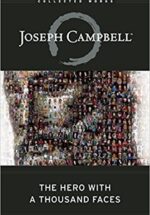
The Hero with a Thousand Faces (The Collected Works of Joseph Campbell)
by
Since its release in 1949, The Hero with a Thousand Faces has influenced millions of readers by combining the insights of modern psychology with Joseph Campbell’s revolutionary understanding of comparative mythology. In these pages, Campbell outlines the Hero’s Journey, a universal motif of adventure and transformation that runs through virtually all of the world’s mythic traditions. He also explores the Cosmogonic Cycle, the mythic pattern of world creation and destruction.
As part of the Joseph Campbell Foundation’s Collected Works of Joseph Campbell, this third edition features expanded illustrations, a comprehensive bibliography, and more accessible sidebars.
As relevant today as when it was first published, The Hero with a Thousand Faces continues to find new audiences in fields ranging from religion and anthropology to literature and film studies. The book has also profoundly influenced creative artists—including authors, songwriters, game designers, and filmmakers—and continues to inspire all those interested in the inherent human need to tell stories.

The History of Life: A Very Short Introduction
by
Here is the extraordinary story of the unfolding of life on Earth, told by Michael J. Benton, a world-renowned authority on biodiversity. Ranging over four billion years, Benton weaves together the latest findings on fossils, earth history, evolutionary biology, and many other fields to highlight the great leaps that enabled life to evolve from microbe to human--big breakthroughs that made whole new ways of life possible--including cell division and multicellularity, hard skeletons, the move to land, the origin of forests, the move to the air. He describes the mass extinctions, especially the Permian, which obliterated 90% of life, and he sheds light on the origins of human beings, and of the many hominids that went before us. He ends by pointing out that studying the past helps us to predict the future: what happens if the atmosphere warms by 5 degrees? What happens if we destroy much of the biodiversity on Earth? These things have happened before, Benton notes. We need only look to the distant past to know the future of life on Earth.
About the Series: Combining authority with wit, accessibility, and style, Very Short Introductions offer an introduction to some of life's most interesting topics. Written by experts for the newcomer, they demonstrate the finest contemporary thinking about the central problems and issues in hundreds of key topics, from philosophy to Freud, quantum theory to Islam.